

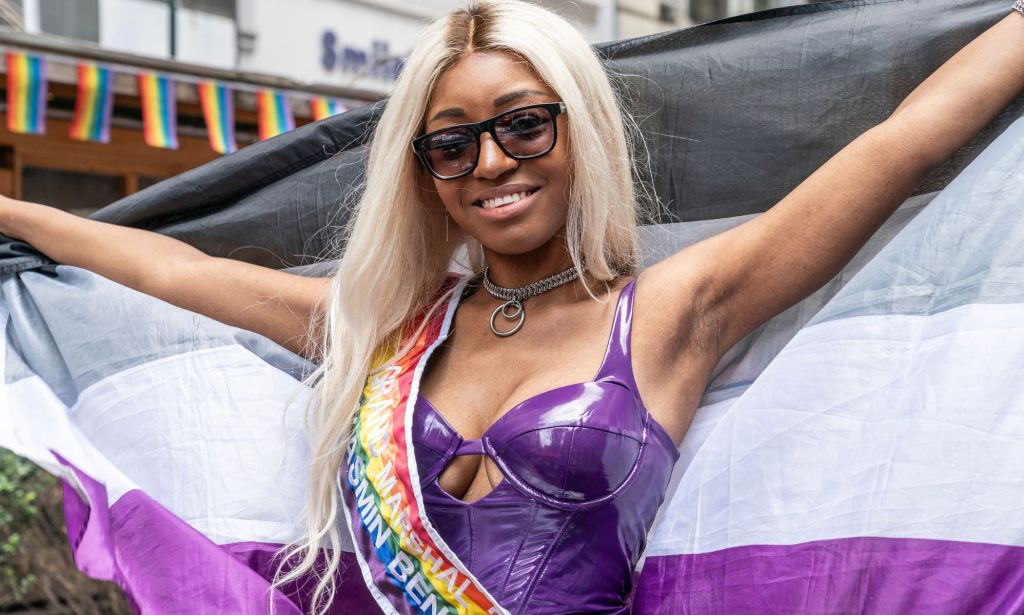
A new study has given some worrying data about asexual people (Stock image via Getty Images)
A new study has found that a majority of asexual people have felt less accepted over the past year.
The Human Rights Campaign looked at the 2025 Annual LGBTQ+ Community Survey (ALCS), and found that among those who identified as asexual, 50.9% reported there was less acceptance, while 63.7% found there was less visibility. In comparison, those figures were 29.7% and 51.1% for LGBTQ+ adults overall, respectively.
Of those surveyed, 4.7% recorded asexual as part of their sexual orientation or identity. Of those, 16.9% identified only as asexual, while 83.1% also included one or more other identities, such as aromantic, demisexual or panromantic. Meanwhile, 58% also said they were transgender or gender-expansive.
Of the people who recorded themself as asexual only, 71.7% felt there was worse acceptance, whereas 46.1% of people who said they were asexual and one or more other identities felt the same.
Those who are asexual and one or more other identity felt they were less open (60.9%) compared to those who just identified as asexual (48%).
Similarly, they said they felt less visible (66.7%) to those who identified only as asexual (57.5%).
‘Asexual people are retreating backward again’
Asexual activist Yasmin Benoit, who partnered with the Human Rights Campaign on the analysis, told PinkNews: “The cultural climate is becoming more conservative, and the rise in queerphobia impacts asexual people as well. While I was working in the US last year, I realised that LGBTQIA+ organisations needed to be doing more for the asexual community there. We report experiencing less acceptance, less visibility and are less likely to be out at higher rates than those with other queer identities. Other queer communities had more support to lose but also more progress to fall back on, the asexual community didn’t have that foundation to begin with, so we’re shrinking further into the margins.
“The data showing that asexual people who just identify as asexual and don’t have other orientation or gender identity-based communities are experiencing even less acceptance is likely an indicator of that. It’s amazing to be able to work with the Human Rights Campaign on this data and show that the asexual community need help to and shouldn’t be left behind.”
Diversity among asexual people
The study found that 58% of those who identified as asexual also recorded they were transgender or gender-expansive.
The data from those respondents showed a much more negative outcome than those who are cisgender.
The asexual and trans or gender-expansive respondents felt less visible than they were a year ago (71.4%) compared to the 45.9% of cis respondents.
It suggests that the decline in visibility of asexual people is affected by the difficult experiences trans and gender-expansive people are having to live through right now.
Share your thoughts!Let us know in the comments below, and remember to keep the conversation respectful.