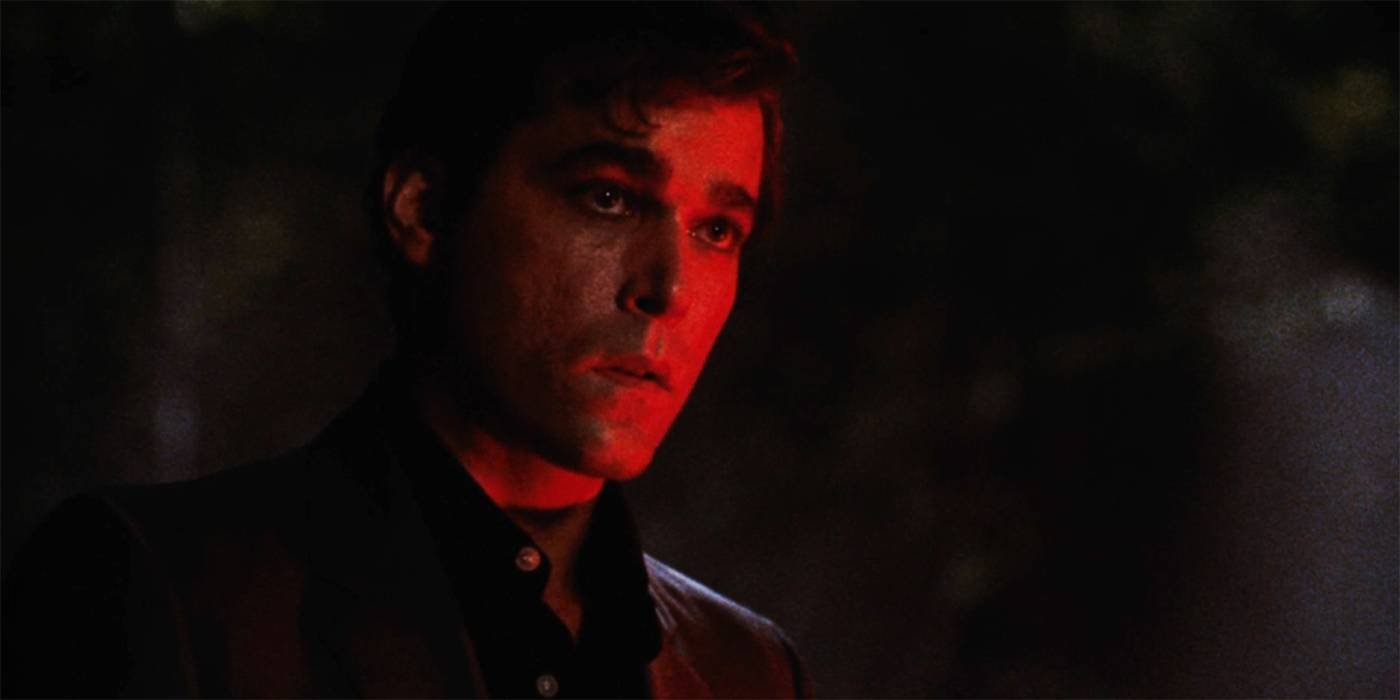
More than three decades after its release, Goodfellas still contains one of the most powerful lines ever written for a gangster movie. Martin Scorsese’s 1990 masterpiece has never suffered from a shortage of memorable dialogue. Adapted from Nicholas Pileggi’s nonfiction book Wiseguy, Goodfellas follows the rise and fall of real-life mob associate Henry Hill, played by Ray Liotta. Across nearly two and a half hours, audiences are immersed in a world of organized crime that is glamorous, violent, exciting, and ultimately self-destructive.
Many of Goodfellas‘ most famous lines have become part of popular culture. Joe Pesci’s Tommy DeVito offers one of cinema’s most quoted and memorable exchanges. Elsewhere, characters discuss getting “made,” settling scores, and navigating the increasingly dangerous world of the Mafia. It is so packed with unforgettable dialogue that most crime movies would be lucky to have a single quote as memorable as its fifth-best line.
Scorsese understood that Goodfellas was more than a crime story. It was a movie about temptation. The audience needed to understand why Henry was drawn toward gangsters long before they witnessed the consequences of that decision. That challenge is solved in a single sentence delivered through narration. As a result, Goodfellas opens with a line that perfectly summarizes not only Henry Hill’s life, but the entire appeal and tragedy of the gangster genre.
Goodfellas’ “I Always Wanted To Be A Gangster” Quote Defines The Entire Movie

Goodfellas’ opening line is deceptively simple: “As far back as I can remember, I always wanted to be a gangster.” It is the piece of narration audiences hear from Henry Hill, immediately establishing the character’s worldview and ambitions.
The scene itself is remarkably effective. After the film opens with Henry, Jimmy Conway, and Tommy DeVito discovering a still-living Billy Batts in their car trunk and brutally finishing the job, the story freezes on Henry’s face. His narration begins, and audiences are transported back to his childhood.
Henry doesn’t say he became a gangster because he had no choice. He doesn’t blame poverty, circumstance, or bad influences. Instead, he openly admits that it was his dream. This perfectly captures the allure of organized crime that sits at the center of Goodfellas. To young Henry, gangsters represent power, respect, wealth, and freedom. As the narration later explains, being a gangster seemed better than being President of the United States.
That aspiration is also what makes Goodfellas tragic. Henry achieves the life he always wanted, only to discover that it inevitably leads to betrayal, paranoia, prison, and witness protection. The opening line therefore functions as both a mission statement and a warning. Everything that follows stems from that single desire. Few gangster movies have ever distilled their central theme so efficiently.
Goodfellas Is One Of The Most Quotable Gangster Movies Ever Made

Part of what makes the opening quote so impressive is the competition it faces within the same movie. Goodfellas is arguably the most quotable gangster film ever made. The “Funny how?” scene between Henry and Tommy is an absolute masterclass in tension and character development, turning an apparently harmless compliment into an utterly terrifying confrontation before revealing itself as a joke.
Goodfellas is also filled with colorful supporting characters whose dialogue instantly establishes their personalities. Jimmy Two Times becomes memorable from a single introduction. Paulie Cicero, Jimmy Conway, and Tommy DeVito all have distinct ways of speaking that make even casual conversations feel authentic.
Despite all those iconic moments, however, nothing surpasses the opening narration. Thirty-six years later, “As far back as I can remember, I always wanted to be a gangster” remains the defining line of Goodfellas, one of the greatest openings in movie history, and a quote that perfectly encapsulates the seductive appeal (and inevitable cost) of the gangster lifestyle.

- Release Date
-
September 19, 1990
- Runtime
-
145 minutes
- Producers
-
Barbara De Fina